


How to Plant Green Leylandii Bareroot Hedging | UK Guide
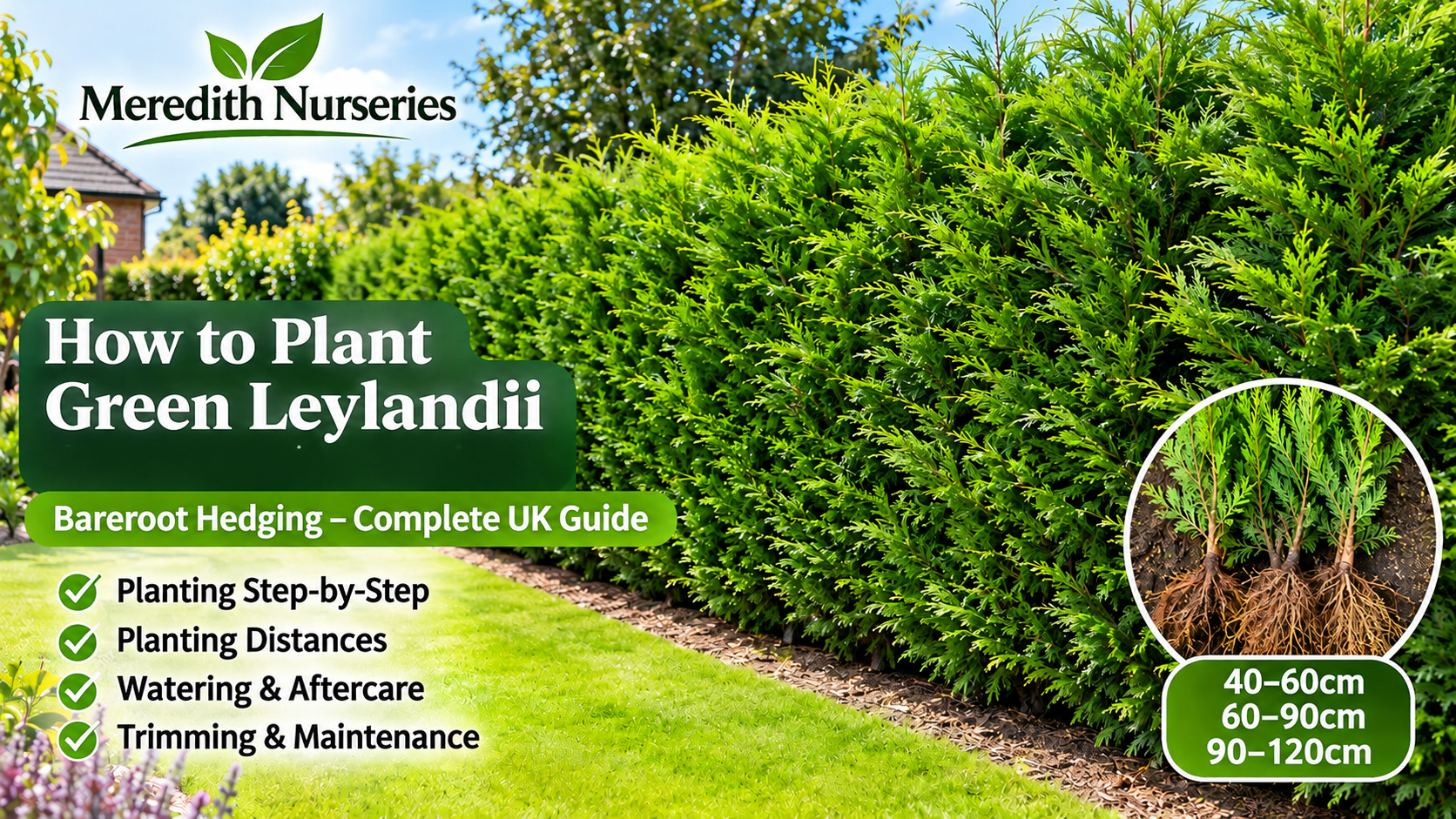
🌲 How to Plant Green Leylandii Bareroot Hedging – Complete UK Planting Guide (40–120cm)
Are you looking to create a beautiful, fast-growing evergreen hedge that provides privacy, shelter and year-round greenery?
Green Leylandii – Chamaecyparis lawsoniana is an attractive evergreen hedging conifer, ideal for creating natural garden boundaries, privacy screens and dense green hedges.
At Meredith Nurseries, we supply Green Leylandii bareroot hedging plants in a range of sizes, from smaller 40–60cm plants to larger 90–120cm specimens, subject to seasonal availability.
Whether you’re planting a short garden boundary or a long evergreen hedge, this comprehensive guide explains everything you need to know about planting, spacing, watering, feeding and maintaining your new Green Leylandii hedge.
🌿 Why Choose Green Leylandii for Your Garden?
Green Leylandii is a popular choice for customers looking to establish an attractive evergreen hedge.
With its dense green foliage, upright growth and ability to respond well to regular trimming, it can provide an effective natural screen for gardens and properties.
🌲 Key Benefits
🌱 Fast Growing – Once established, plants can grow approximately 60–90cm per year under favourable conditions.
🏡 Excellent Privacy Screening – Dense evergreen foliage creates an attractive natural garden boundary.
💚 Year-Round Greenery – Maintains attractive green foliage throughout the seasons.
🌬️ Natural Wind Protection – A well-established hedge can help provide shelter from prevailing winds.
✂️ Suitable for Regular Trimming – Can be maintained as a neat, formal hedge.
🌳 Ideal for Larger Projects – Suitable for long garden boundaries, screening and landscaping.
🪴 Bareroot Plants – A practical seasonal option for establishing new hedges.
📏 Choosing the Right Size Green Leylandii Plants
Choosing the correct starting height depends on your budget, garden size and how quickly you want your hedge to provide visual screening.
At Meredith Nurseries, our Green Leylandii bareroot hedging plants may be available in the following sizes:
| Plant Height | Best Suited For |
|---|---|
| 40–60cm | Economical hedge planting and long garden boundaries |
| 60–90cm | Customers wanting additional initial height |
| 90–120cm | Taller starting hedges and screening projects |
🌱 Green Leylandii 40–60cm
Our 40–60cm bareroot Green Leylandii plants are an economical choice for creating a new hedge.
Their smaller size makes them easier to handle and plant, particularly when establishing longer garden boundaries.
With suitable soil preparation, watering and aftercare, they can develop into an attractive evergreen hedge.
🌲 Green Leylandii 60–90cm
The 60–90cm size offers a useful balance between initial height and ease of planting.
These plants are suitable for customers looking to establish a taller hedge without starting with the largest available specimens.
🌳 Green Leylandii 90–120cm
Our larger 90–120cm bareroot plants provide greater height immediately after planting.
They are particularly suitable for customers wanting a more established-looking hedge from the outset.
Larger bareroot plants require additional care during planting and establishment, particularly when protecting the roots from drying out.
Remember: Larger plants do not necessarily establish faster than smaller plants. Healthy root development and correct aftercare are essential.
🍂 When Is the Best Time to Plant Bareroot Green Leylandii?
In the UK, the normal bareroot planting season is generally between November and March, depending on weather conditions and stock availability.
The cooler months are often suitable because soil moisture is usually higher and plants experience less heat stress.
However, Green Leylandii is evergreen, meaning its foliage can continue to lose moisture during winter.
For this reason, protecting the exposed roots is particularly important.
❄️ Avoid Planting When:
- The ground is frozen.
- The soil is waterlogged.
- Conditions are unusually hot or dry.
- Strong winds could dry exposed roots.
🌱 Meredith Nurseries Tip: Always aim to plant your bareroot Green Leylandii as soon as possible after delivery.
☀️ Where Should You Plant Green Leylandii?
Choosing the right location will help your new hedge establish successfully.
☀️ Sunlight: Full sun or partial shade.
🌱 Soil: Most reasonably fertile, well-drained garden soils.
💧 Drainage: Avoid permanently waterlogged areas.
🏡 Space: Allow sufficient room for the hedge to grow and for future trimming.
🌬️ Shelter: Young bareroot plants benefit from protection against severe drying winds during establishment.
Before planting, consider the hedge’s future height, width and proximity to neighbouring properties, paths and buildings.
📏 How Far Apart Should You Plant Green Leylandii?
Correct planting distances are essential for creating a dense and attractive evergreen hedge.
For most domestic hedging projects, we recommend approximately 2 plants per metre, giving a planting distance of around 50cm between plants.
For closer initial planting, approximately 3 plants per metre may be suitable, although this can increase competition as the plants grow.
🌲 Green Leylandii Planting Calculator
| Hedge Length | Approximate Plants Required |
|---|---|
| 5 metres | 10 plants |
| 10 metres | 20 plants |
| 15 metres | 30 plants |
| 20 metres | 40 plants |
| 25 metres | 50 plants |
| 30 metres | 60 plants |
| 50 metres | 100 plants |
These estimates are based on 50cm spacing in a single row. Exact quantities depend on the layout and position of the end plants.
Does Plant Size Affect Spacing?
Whether you’re planting 40–60cm, 60–90cm or 90–120cm Green Leylandii, the spacing should be based primarily on your intended mature hedge rather than the initial height.
🪴 Step-by-Step Guide to Planting Bareroot Green Leylandii
🌱 Step 1 – Prepare Your Planting Area
Start by removing weeds, grass, stones and unwanted vegetation from the planting area.
Loosen the soil to improve the growing conditions and make it easier for new roots to establish.
For long hedges, use a garden string line to mark a straight planting row.
🌱 Step 2 – Protect the Bareroot Plants
Unlike pot-grown plants, bareroot Green Leylandii are supplied without pots or a surrounding compost root ball.
This means their exposed roots need extra protection.
Keep the roots covered with suitable damp material and avoid leaving them exposed to direct sunlight or drying winds.
If planting is delayed, temporarily heel the roots into moist soil.
Important: Never allow bareroot conifer roots to dry out.
🌱 Step 3 – Dig the Planting Holes
Dig a planting hole wide enough to accommodate the root system naturally.
The roots should be able to spread without bending or folding upwards.
For larger 90–120cm plants, the planting hole may need to be wider to accommodate the additional root growth.
🌱 Step 4 – Position the Plant
Place your Green Leylandii upright in the planting hole.
Ensure it is planted at approximately the same depth as it was growing previously.
A visible soil mark on the lower stem can help identify the original planting depth.
Avoid burying the stem too deeply.
🌱 Step 5 – Backfill and Firm the Soil
Carefully replace the excavated soil around the roots.
Gently firm the soil to remove large air pockets and ensure good contact between the roots and surrounding ground.
Avoid excessively compacting the soil.
💧 Step 6 – Water Thoroughly
Water immediately after planting.
This helps settle the soil around the roots and provides moisture for establishment.
Pay particular attention to larger plants, which can be more vulnerable to moisture stress.
🍂 Step 7 – Apply Mulch
Apply a suitable layer of organic mulch around the planting area.
Mulch helps retain moisture, suppress weeds and protect the soil surface.
Keep mulch away from direct contact with the stems.
🌲 Step 8 – Check Stability
Check that each plant is upright and securely planted.
Larger 90–120cm plants may require temporary support in exposed positions.
💧 How Often Should You Water Newly Planted Green Leylandii?
Watering is one of the most important parts of establishing a healthy evergreen hedge.
Because bareroot plants have been lifted from the ground, their root systems need time to establish in their new location.
🌱 During the First Few Weeks
Check soil moisture regularly and water when necessary.
The soil should remain moist but not waterlogged.
☀️ During Spring and Summer
Water deeply during prolonged dry periods.
Plants growing in sandy soils or exposed locations may need additional watering.
🍂 During Autumn and Winter
Continue monitoring soil moisture, especially during dry or windy weather.
Evergreen foliage can lose moisture even in cooler conditions.
Top Tip: Water the root zone thoroughly when required rather than applying small amounts of water to the surface.
🌿 Should You Feed Newly Planted Green Leylandii?
Healthy soil and adequate moisture are generally more important than heavy fertiliser applications immediately after planting.
Once your hedge begins establishing, a suitable evergreen or conifer fertiliser can be applied according to the manufacturer’s instructions.
Avoid excessive feeding, particularly where the soil is already fertile.
You can also explore suitable plant establishment products at Meredith Nurseries.
✂️ How to Trim and Maintain Your Green Leylandii Hedge
Regular trimming helps encourage dense growth and keeps your hedge at a manageable height.
Allow newly planted bareroot Green Leylandii time to establish before carrying out substantial pruning.
Once the plants are growing strongly, light trimming of suitable new growth can help maintain a tidy shape.
🌲 Hedge Maintenance Tips
✂️ Trim regularly to maintain the desired shape.
🌱 Avoid cutting deeply into old, bare brown wood.
☀️ Keep the hedge slightly wider at the bottom than the top to allow sunlight to reach the lower foliage.
🏡 Monitor the height and width to avoid excessive growth.
🐦 Always check for active bird nests before cutting. Do not damage or destroy an active wild bird nest.
⚠️ Common Problems with Newly Planted Bareroot Green Leylandii
Brown or Dry Foliage
Possible causes include root drying, transplant stress, drought or poor growing conditions.
Ensure the soil remains adequately moist and protect roots before planting.
Slow Growth
Newly planted hedging may initially focus on establishing roots rather than producing significant top growth.
Check drainage, soil moisture and general growing conditions.
Yellowing Foliage
Yellowing may be associated with waterlogging, nutrient imbalance or root stress.
Inspect the soil and drainage before applying fertiliser.
Leaning Plants
Check that the soil is firm around the roots.
Larger plants may benefit from temporary support in exposed areas.
🚚 Ordering Green Leylandii Bareroot Hedging from Meredith Nurseries
At Meredith Nurseries, we supply Green Leylandii bareroot hedging plants for garden boundaries, privacy screening and larger landscaping projects.
🌲 Available Sizes: 40–60cm, 60–90cm and 90–120cm, subject to stock availability.
🌱 Supplied Barerooted: Plants are supplied without nursery pots.
📦 Carefully Packed: Roots are protected during packing and delivery.
🚚 Minimum Order for Delivery – 20 Plants
Our Green Leylandii bareroot hedging conifers are priced and sold individually, but a minimum of 20 plants must be purchased per order for delivery.
You can order 20, 21, 22 or more plants, depending on your requirements.
The advertised price is per plant, not for a pack of 20.
Visit www.meredithnurseries.co.uk to browse our available hedging plants.
❓ Frequently Asked Questions
How quickly does Green Leylandii grow?
Once established, plants can grow approximately 60–90cm per year under favourable conditions. Actual growth depends on the variety, soil, climate and aftercare.
How many Green Leylandii plants do I need for a 10-metre hedge?
At approximately 50cm spacing, you will generally need around 20 plants.
Can I plant Green Leylandii in winter?
Yes, provided soil conditions are suitable and the ground is not frozen or waterlogged. Bareroot evergreen plants require careful handling and prompt planting.
What is the difference between 40–60cm and 90–120cm plants?
The larger plants provide greater initial height, while smaller plants can be more economical and easier to handle.
How long does a new Green Leylandii hedge take to establish?
Establishment varies according to plant size, soil conditions, weather and watering. The first growing season is particularly important.
Can I plant Green Leylandii close to a fence?
Yes, but leave enough room for the plants to develop and for future hedge trimming and maintenance.
Do Green Leylandii plants stay green all year?
Yes. They are evergreen conifers and retain foliage throughout the year.
🌲 Create a Beautiful Evergreen Hedge with Meredith Nurseries
Whether you’re planting a small garden boundary or a long privacy hedge, Green Leylandii offers an attractive evergreen solution.
By choosing suitable plants, preparing the ground correctly and providing appropriate watering and maintenance, you can help your new hedge establish successfully.
From economical 40–60cm plants to taller 90–120cm specimens, Meredith Nurseries offers options for different garden projects.
🌱 Start planning your new evergreen hedge today.
Visit Meredith Nurseries to explore our available bareroot hedging conifers and other garden plants.