


Understanding Plant Pot Sizes: A Guide to Buying Plants from P9 to 5-Litre Pots
🌿 Understanding Plant Pot Sizes: A Guide to Buying Plants from P9 to 5-Litre Pots
When shopping for plants online, you may notice that plants are sold in different pot sizes, such as P9, 1-litre, 2-litre, 3-litre and 5-litre pots. But what do these sizes actually mean, and which one is right for your garden?
At Meredith Nurseries, we understand that choosing the right plants can sometimes be confusing, especially when buying online. That’s why we’ve put together this handy guide to help you understand the different plant pot sizes available and what you can expect when your plants arrive.
Whether you’re planting a colourful flower bed, creating an evergreen border, growing dwarf conifers in containers or establishing a new hedge, understanding pot sizes can help you make the right choice for your garden.
🌱 What Does P9 Mean?
A P9 pot is a popular size used by nurseries for young plants, including heathers, dwarf shrubs, small perennials and some young conifers.
The letter P refers to a plant pot, while the number relates to the approximate size of the pot.
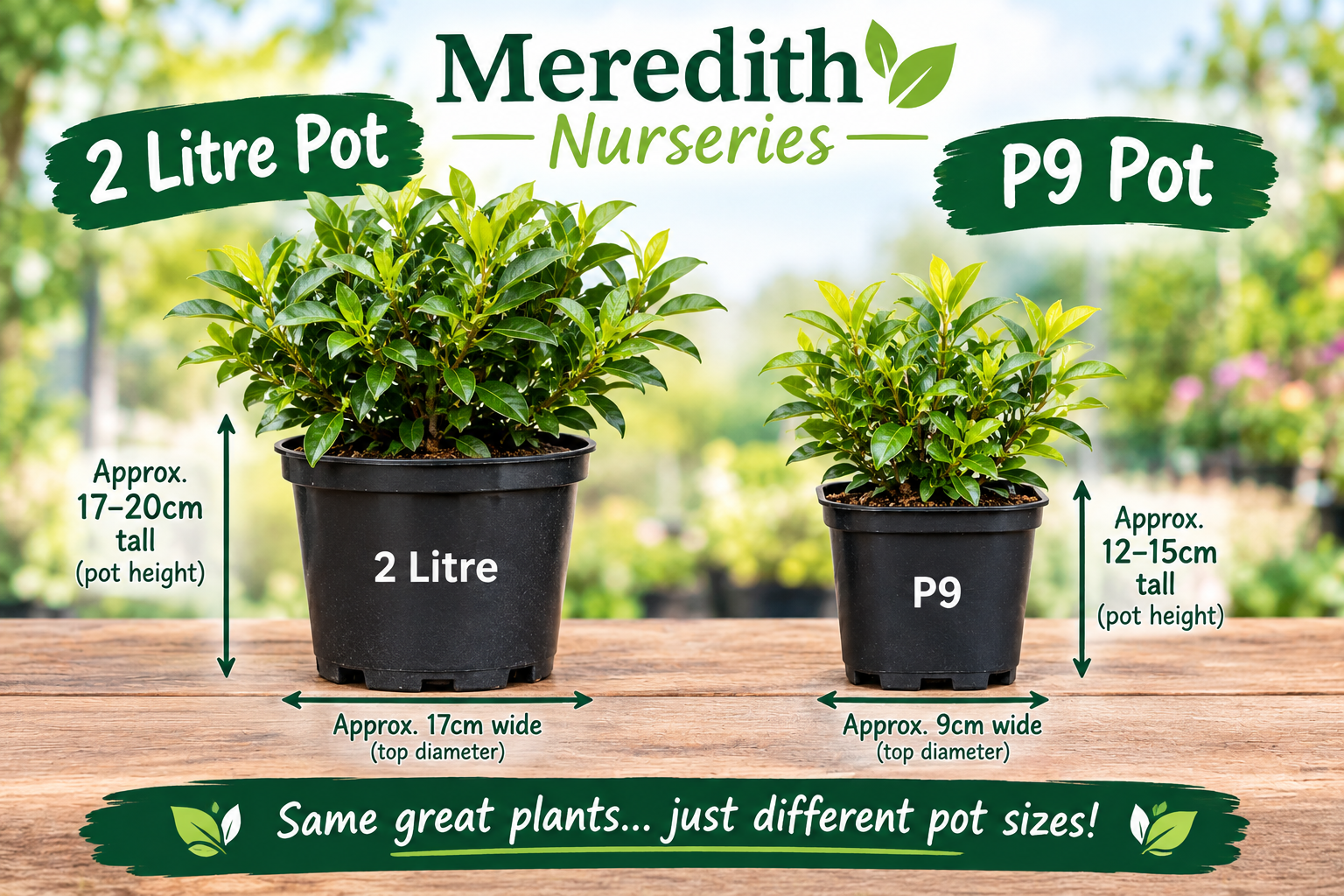
A standard P9 pot is approximately 9cm wide, although exact dimensions can vary slightly between growers and pot designs.
What to Expect from a P9 Plant
- 🌿 Typically supplied in a pot approximately 9cm wide.
- 🌱 Ideal for young plants that are establishing their root systems.
- 🌸 A popular choice for heathers, small flowering plants and young shrubs.
- 💷 An economical way to purchase several plants for borders and planting schemes.
- 🌳 Suitable for gardeners who are happy to allow their plants time to grow and develop.
P9 plants are particularly useful when buying plants in multiples. If you’re filling a border, creating a colourful planting display or adding ground cover to your garden, smaller potted plants can be an affordable way to get started.
Remember: P9 describes the pot size, not the height or maturity of the plant. Different varieties naturally grow at different rates and may arrive at different heights.
🌿 1-Litre Plant Pots
A 1-litre pot holds approximately one litre of growing compost. It is a useful size for young shrubs, ornamental plants and smaller varieties of evergreen plants.
Compared with many P9 plants, a plant grown in a 1-litre pot may have a more developed root system and a larger amount of compost around its roots. However, this depends on the plant species, its age and how it has been grown.
Benefits of 1-Litre Plants
- 🌱 A useful middle ground between smaller starter plants and larger specimens.
- 🌿 Suitable for a wide range of shrubs, perennials and young evergreen plants.
- 🌸 Ideal for adding plants to established borders.
- 🪴 Can be planted in suitable garden containers or directly into the ground.
- 💚 Often a good option for gardeners looking for a balance between price and plant size.
A 1-litre plant is worth considering if you want something more established than a small starter plant without moving up to a larger, more expensive pot size.
🌳 2-Litre Plant Pots
A 2-litre pot is a popular choice for garden shrubs, dwarf conifers, evergreen plants and ornamental varieties.
These plants have been grown in a container holding approximately two litres of compost. They may have a more developed root system than smaller potted plants, although growth and size vary considerably between varieties.
At Meredith Nurseries, 2-litre pots are a useful option for gardeners looking to add structure, colour and interest to their gardens.
Why Choose a 2-Litre Plant?
- 🌿 A versatile size for many garden shrubs and evergreen plants.
- 🌳 Popular for dwarf conifers and compact ornamental varieties.
- 🌱 Provides room for roots to develop before planting.
- 🏡 Suitable for borders, rockeries and many garden planting schemes.
- 🌸 A good option when you want a more established plant without choosing a very large pot.
Dwarf conifers in 2-litre pots can be particularly useful for rock gardens, gravel gardens, mixed borders and decorative planting areas. Flowering shrubs in this size can also help add colour and variety to your garden.
Keep in mind that a naturally slow-growing dwarf conifer may remain compact for many years, even when supplied in a larger pot.
🌲 3-Litre Plant Pots
Moving up to a 3-litre pot gives the plant a larger volume of growing compost. Depending on the variety and growing conditions, plants supplied in this size may be more established than their smaller-pot equivalents.
Three-litre pots are commonly used for shrubs, evergreen plants and some larger ornamental varieties.
Benefits of 3-Litre Plants
- 🌱 A larger volume of compost around the roots.
- 🌿 Suitable for a range of shrubs and ornamental plants.
- 🌳 Useful for adding more established plants to borders.
- 🏡 Can help create a fuller planting scheme when choosing suitable varieties.
- 💚 A good option for gardeners who want to move beyond smaller starter plants.
If you’re planning a garden border, a 3-litre plant may provide a useful balance between plant development and affordability. However, always check the individual product description, as a plant’s height, width and growth habit depend on its variety rather than pot size alone.
🪴 5-Litre Plant Pots
A 5-litre pot contains approximately five litres of growing compost and is often used for more established shrubs and ornamental plants.
Plants supplied in 5-litre pots can be a good choice when you’re looking for a more substantial starting point for your garden. Depending on the variety, they may have a larger root system and more developed top growth than plants supplied in smaller pots.
Why Choose a 5-Litre Plant?
- 🌳 Often suitable for more established shrubs and ornamental plants.
- 🌿 A larger volume of compost for root development.
- 🌱 Useful for creating structure in borders and planting schemes.
- 🏡 Suitable for a wide range of garden designs, depending on the plant variety.
- 🌸 A good option when you want to start with a more developed plant.
Larger pots can be particularly useful when planting feature shrubs or adding evergreen structure to a garden. However, they will generally take up more space during delivery and may require more effort to handle and plant.
A 5-litre plant is not necessarily five times taller than a P9 plant. The difference in height and spread depends on the species, variety, age and growing conditions.
📏 Plant Pot Sizes at a Glance
Here’s a quick guide to the pot sizes covered in this article.
| Pot size | Approximate capacity or dimensions | Common uses |
|---|---|---|
| P9 | Approximately 9cm wide | Young plants, heathers, small perennials and starter shrubs |
| 1-litre | Approximately 1 litre of compost | Young shrubs, ornamental plants and smaller evergreens |
| 2-litre | Approximately 2 litres of compost | Dwarf conifers, shrubs and evergreen plants |
| 3-litre | Approximately 3 litres of compost | More established shrubs and ornamental plants |
| 5-litre | Approximately 5 litres of compost | Larger or more established shrubs and garden plants |
These are general guides rather than guarantees of plant size. Pot dimensions, plant height, root development and overall appearance can vary between varieties and growers.
🌿 Which Plant Pot Size Should You Choose?
The best pot size depends on your budget, the type of plant you’re buying and how quickly you’d like your garden to develop.
Choose P9 Plants If:
- You want to buy several plants economically.
- You’re happy to let young plants grow and establish.
- You’re filling a border or creating a larger planting scheme.
- You’re looking for smaller plants such as suitable heathers or young perennials.
Choose 1-Litre Plants If:
- You want a useful step up from smaller starter plants.
- You’re planting a mixed border.
- You want young shrubs or ornamental plants in a manageable size.
Choose 2-Litre Plants If:
- You’re looking for dwarf conifers or evergreen shrubs.
- You want a versatile pot size for different areas of the garden.
- You want a plant that may be more established than a smaller-pot alternative.
Choose 3-Litre Plants If:
- You want a more developed plant, depending on the variety.
- You’re adding shrubs to an established garden.
- You want to balance plant size with your budget.
Choose 5-Litre Plants If:
- You prefer to start with a more substantial plant.
- You’re planting feature shrubs or adding structure to a border.
- You have the space and budget for larger pots.
🌱 Does a Bigger Pot Mean a Bigger Plant?
Not always!
Pot size tells you how much growing space the plant’s container provides, but it doesn’t tell you exactly how tall or wide the plant will be.
For example, a naturally compact dwarf conifer in a 5-litre pot may still be smaller than a fast-growing shrub in a 2-litre pot. Different plants have different growth rates, shapes and mature sizes.
When buying plants online, it’s worth checking:
- 🌿 The plant’s approximate height on arrival.
- 🌳 Its expected mature height and spread.
- 🌱 Whether it is a slow-growing or fast-growing variety.
- 🪴 The supplied pot size.
- ☀️ The recommended growing conditions.
- 💧 The plant’s watering and care requirements.
Looking at all these details will help you choose plants that suit your garden and your expectations.
💧 Caring for Your Plants After Delivery
Whatever pot size you choose, giving your plants the right care after delivery will help them settle into their new home.
1. Unpack Your Plants Carefully
Remove the packaging as soon as possible after delivery and check that your plants are in good condition.
2. Check the Compost
Feel the compost before watering. If it is dry, water the plant thoroughly. If it is already moist, avoid adding unnecessary water.
3. Plant at the Right Time
Most container-grown plants can be planted throughout much of the year when the soil is workable and conditions are suitable. Avoid planting into frozen or waterlogged ground, and take extra care during very hot or dry weather.
4. Choose the Right Location
Check whether your plant prefers full sun, partial shade or a more sheltered position. Matching the plant to the right location will help it establish successfully.
5. Water While the Plant Establishes
Newly planted plants need regular attention, especially during dry weather. Water according to the plant’s needs and the condition of the soil.
6. Allow Room to Grow
Check the plant’s expected mature spread before planting. This is particularly important when creating hedges, borders or mixed shrub displays.
🛒 Shop Plants at Meredith Nurseries
At Meredith Nurseries, we know that every garden is different. Whether you’re looking for smaller plants to fill a border, dwarf conifers to add year-round interest, evergreen shrubs for structure or flowering plants to brighten your outdoor space, choosing the right pot size is an important first step.
From P9 starter plants to shrubs supplied in larger 5-litre pots, understanding the differences can help you shop with greater confidence.
Remember to check each product listing for its supplied pot size, plant description and growing information so you know what to expect before ordering.
🌿 Meredith Nurseries – helping you bring your garden to life, one plant at a time!
🔎 Frequently Asked Questions
What is a P9 plant pot?
A P9 is a small plant pot, typically around 9cm wide. It is commonly used for young plants, including heathers, perennials and small shrubs.
Is a 2-litre plant bigger than a P9 plant?
A 2-litre pot holds considerably more compost than a P9 pot. However, the plant’s actual height and spread depend on its variety, age and growing conditions.
Are plants in 5-litre pots more established?
They may be, but not always. A 5-litre pot provides more growing medium, although plant maturity and root development vary.
Can I plant P9 plants straight into the garden?
Yes, provided the plant is suitable for the location and the soil and weather conditions are appropriate. Water carefully while it establishes.
Do all plants grow at the same rate?
No. Some plants grow quickly, while others, such as many dwarf conifers, grow slowly and naturally remain compact.
Should I choose a larger pot for a hedge?
The best choice depends on your budget, desired planting density, variety and how quickly you want the hedge to develop. Check the individual plant’s growth rate and recommended spacing before ordering.